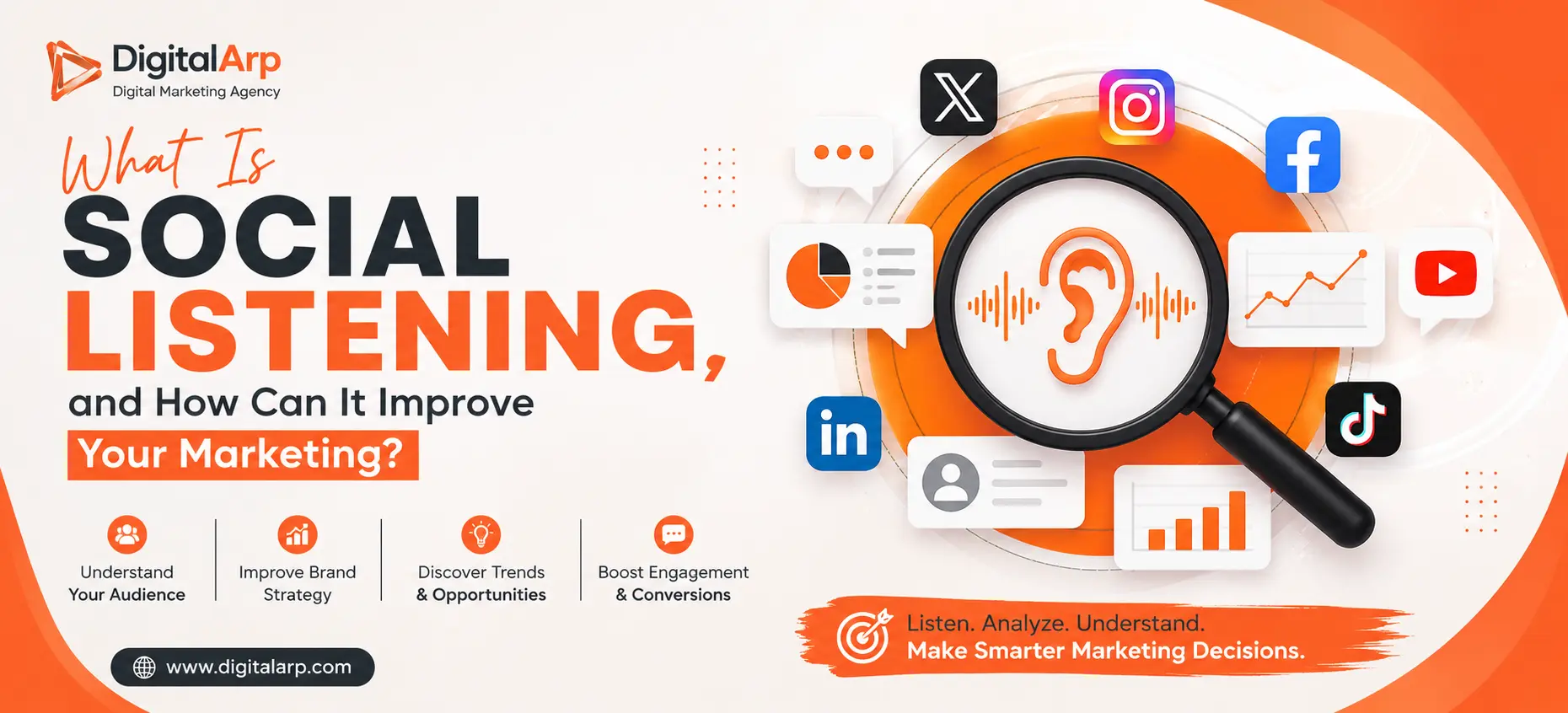

What Is Social Listening?
Social listening is the process of tracking conversations across social media, forums, blogs, and review sites — then analyzing that data to understand sentiment, trends, and opportunities relevant to your brand or industry.
Unlike simply checking notifications, social listening involves searching for keywords, phrases, hashtags, and topics related to your business, even when your brand isn't directly tagged. The goal isn't just to see what people are saying — it's to understand why they're saying it and what to do next.
How Social Listening Works
- A social listening tool scans platforms (Instagram, X, TikTok, Reddit, forums, news sites, and more) for specified keywords.
- Mentions are collected and categorized by sentiment — positive, negative, or neutral.
- Data is organized into themes, trends, and reports.
- Marketing, product, and customer service teams use those insights to make decisions.
Social Listening vs. Social Media Monitoring
These two terms are often used interchangeably, but they serve different purposes.
| Aspect | Social Media Monitoring | Social Listening |
|---|---|---|
| Focus | Direct mentions and messages | Broader conversations and trends |
| Purpose | Respond quickly | Understand sentiment and strategy |
| Approach | Reactive | Proactive |
| Timeframe | Real-time replies | Ongoing analysis over time |
| Example | Replying to a customer complaint | Identifying why complaints are rising |
Pro Tip: Think of monitoring as answering the phone when it rings, and listening as understanding the conversations happening in the room next door — before anyone calls you at all.
Why Social Listening Is Important
Understand Customer Sentiment
Social listening shows you how people genuinely feel about your brand, in their own words, without the polish of a survey response.
Improve Customer Service
Spotting frustration early — even in posts that don't tag you — lets your support team step in before a complaint turns into a public pile-on.
Discover Content Ideas
Recurring questions and comments are free content prompts. If your audience keeps asking the same thing, that's your next blog post, video, or FAQ.
Monitor Competitors
Listening to what people say about competitors reveals gaps you can fill — features they wish existed, service issues they're frustrated by, or pricing complaints you can position against.
Identify Industry Trends
Broader keyword tracking shows shifts in what your industry cares about, often before those shifts show up in formal market research.
Generate Better Leads
Conversations where people describe a problem your product solves — even without mentioning your brand — are warm leads waiting to be found.
Increase Customer Loyalty
When customers see a brand respond to their feedback (even feedback they didn't address directly to the company), it builds trust and long-term loyalty.
Top Benefits of Social Listening
- Real-time brand reputation management — Catch and respond to reputation risks before they escalate into a crisis.
- Sharper customer insights — Learn what your audience values, in language they actually use, not marketing-speak.
- Smarter campaign planning — Base campaigns on real audience interest instead of internal assumptions.
- Better product development — Direct, unfiltered feedback often reveals product gaps faster than internal QA.
- Competitive advantage — Understanding competitor weaknesses helps you position your brand more effectively.
- Improved ROI on content — Creating content around topics your audience already cares about increases engagement and shares.
- Crisis prevention — Early sentiment shifts act as an early-warning system for PR issues.
Example: A skincare brand tracking mentions noticed repeated confusion among customers about which products suited different skin types. That insight led directly to clearer product descriptions and a quiz tool on their website — reducing return rates and support tickets.
Best Social Listening Tools
| Tool | Best For |
|---|---|
| Brandwatch | Enterprise-level, deep analytics and historical data |
| Sprout Social | All-in-one social management with built-in listening |
| Hootsuite | Teams already using Hootsuite for scheduling and management |
| Mention | Affordable, real-time brand and competitor tracking |
| Meltwater | PR teams needing media and social monitoring combined |
| BuzzSumo | Content research and identifying trending topics |
| Talkwalker | Visual and image recognition alongside text mentions |
| Google Alerts | Free, basic keyword tracking for small businesses |
Pro Tip: You don't need every tool on this list. Start with one free option (Google Alerts) and one paid tool that fits your budget, then expand as your listening needs grow.
How to Build a Social Listening Strategy
Step 1: Define Your Goals
Are you focused on reputation management, lead generation, content ideas, or competitor research? Your goal shapes which keywords and metrics matter.
Step 2: Choose Your Keywords
Track your brand name (including common misspellings), product names, executive names, competitor names, and relevant industry terms.
Step 3: Select the Right Tool
Match your tool choice to your budget and goals — a solo entrepreneur doesn't need the same setup as an enterprise brand.
Step 4: Set Up Sentiment Tracking
Configure your tool to flag positive, negative, and neutral mentions so you can spot shifts quickly.
Step 5: Assign Ownership
Decide who reviews the data weekly and who acts on it — marketing, customer service, or product teams.
Step 6: Turn Insights Into Action
Data that sits in a dashboard is worthless. Build a habit of translating findings into content plans, campaign tweaks, or product changes.
Common Mistakes to Avoid
- Tracking only direct brand mentions and missing broader conversations
- Ignoring negative sentiment until it becomes a crisis
- Collecting data without assigning anyone to act on it
- Focusing on volume of mentions instead of quality of insight
Real-World Example
When Chick-fil-A swapped its original BBQ sauce for a new recipe, social listening tools picked up a sharp spike in negative sentiment and a wave of complaints tied to the hashtag campaign fans created to protest the change. That early signal gave the brand's team visibility into just how strongly customers felt — turning what could have been a quiet loss of goodwill into an opportunity to directly address the feedback.
The lesson: social listening doesn't just catch complaints, it measures how much they matter — which is exactly the kind of signal that should shape a brand's next move.
Common Challenges in Social Listening
Data Overload
Thousands of mentions can be overwhelming without clear filters and priorities.
Fake Mentions and Bots
Not every mention is genuine — bot activity and spam can skew sentiment data if left unfiltered.
Choosing the Right Metrics
Vanity metrics like total mention count matter less than sentiment trends and actionable themes.
Privacy Considerations
Listening tools should only track public conversations and comply with platform terms of service and data privacy regulations.
The Future of Social Listening
Social listening is shifting from manual review toward AI-assisted analysis. Expect more tools to offer:
- Predictive analytics that flag potential PR issues before they trend
- AI-powered sentiment analysis that understands sarcasm, tone, and context more accurately
- Automation that routes urgent mentions directly to the right team member
- Visual listening, including image and video recognition, not just text
As Brian Wright, Social Media Listening and Intelligence Leader at Wells Fargo, put it in a conversation with eMarketer, social listening provides real-time insights for strategic decision-making, especially during periods of change.
Conclusion
Social listening turns scattered online conversations into a strategic advantage. It helps you understand customer sentiment, catch problems early, generate content ideas, and stay ahead of competitors — all by paying attention to conversations happening whether or not you're tagged in them.
If your brand isn't listening yet, you're planning your marketing with half the picture. Start small, stay consistent, and let real conversations guide your next move.
Ready to put social listening to work for your brand? Reach out to a digital marketing agency that can build a listening strategy tailored to your goals — and turn those insights into campaigns that actually convert.
Frequently Asked Questions
1. What is social listening in simple terms?
It's the process of tracking and analyzing online conversations about your brand, industry, or competitors to inform marketing and business decisions.
2. How is social listening different from social media monitoring?
Monitoring tracks direct mentions for quick responses. Listening analyzes broader conversations and trends to guide strategy.
3. Is social listening only for big brands?
No. Small businesses and startups can use free or affordable tools like Google Alerts or Mention to get started.
4. What are the best social listening tools?
Popular options include Brandwatch, Sprout Social, Hootsuite, Mention, Meltwater, BuzzSumo, Talkwalker, and Google Alerts.
5. How often should I check social listening data?
Weekly reviews work for most businesses, though brands managing active campaigns or crises may check daily.
6. Can social listening help with lead generation?
Yes. Conversations describing a problem your product solves — even without mentioning your brand — can be identified and converted into leads.
7. Does social listening help during a PR crisis?
Yes. It's often the earliest signal that sentiment is shifting, giving your team time to respond before an issue escalates.
8. Is social listening data always accurate?
Not entirely — bots, spam, and fake mentions can skew results, so filtering and human review are still necessary.